
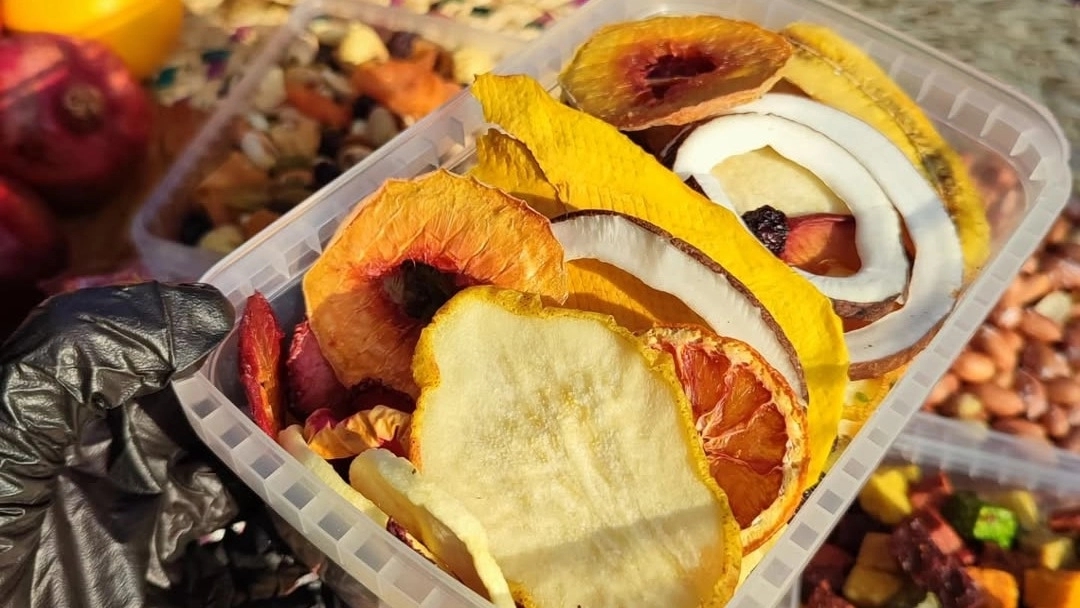
"Dry fruit", this tasty and tasty food has been used for centuries as a valuable food source in various cultures. From ancient times when humans were looking for ways to keep food long -term food, drying of fruits has been recognized as an effective and efficient way to maintain their nutritional value and taste.
Nowadays, with the advancement of technology and the development of modern drying methods, "dried fruit" has become a popular and available product available in a variety of flavors, textures and applications. "Dry fruit" is not only a delicious and delicious snack, but it is also a rich source of vitamins, minerals, antioxidants and fiber that play an important role in maintaining health and preventing diseases.
What is dried fruit?
"Dry fruit" is a fruits that have greatly reduced their moisture by using different methods. This reduction in moisture makes the "dried fruit" longer lasting and prevents the corruption and growth of microorganisms. "Dry fruit" can be made from a variety of fruits, including apples, apricots, peaches, plums, raisins (dried grapes), dates, figs, berries, bananas, pineapples and many more.
The drying process reduces the volume of the fruit and concentrates its natural sugar, so "dried fruit" is usually sweeter than fresh fruit. However, the nutritional value of "dried fruit" is largely preserved and in some cases even increases. The main difference between "dried fruit" and fresh fruit is their moisture and shelf life. Fresh fruit contains a lot of water and should be stored in the refrigerator, while the "dried fruit" has little moisture and can be stored at room temperature.
The history and the emergence of dried fruit
Drying of fruits as a nutritional storage method is very long. Archaeological evidence shows that humans have been dried for preservation and preservation for thousands of years. In ancient civilizations such as Egypt, Mesopotamia and Rome, "dried fruit" was used as an important source of food in a season where fresh fruit was not available. Also, due to its low weight and high shelf life, "dried fruit" was a good food for long -term travel and business.
Throughout history, various methods have been used to dry fruits, including drying in the sun, drying in the shade, drying using fire and smoke, and drying with salt. With the advancement of technology, modern drying methods such as warm air drying, drying and drying with microwaves have been developed, which improve the quality and speed of "dried fruit" production. The history of "dried fruit" shows that this food has long been an integral part of the human diet and has played an important role in supplying the food they need throughout the year.
Dry fruit production methods: from traditional to modern
Drying in the sun: This is the most traditional and simplest method of drying fruits. In this way, the fruits are spread out on clean trays or fabrics after washing and crushing and exposed to direct sunlight to evaporate their moisture gradually. Drying in the sun usually takes several days and requires good weather conditions (sunny and dry).
Drying in the shade: This method is suitable for fruits that are sensitive to direct sunlight, such as apricots and peaches. In this method, the fruits are shaded and exposed to air to dry. Drying in the shade usually takes longer than drying in the sun.
Drying with warm air: In this way, the fruits are placed in special dryers and evaporate their moisture using hot air flow. Drying with warm air is faster than traditional methods, and temperature and humidity can be strictly controlled.
Freeze-drying: This is the most advanced and expensive method of drying fruits. In this way, the fruits are frozen first and then exposed to a vacuum. In vacuum conditions, the water in the fruits is converted directly from solid (ice) to a gas state, without first converting to liquid. Drying of schemes makes the fruits better preserved their texture, taste and color.
Drying using microwave: This is a relatively new method, using microwave waves to evaporate fruit moisture. Drying using the microwave is very fast, but it can eliminate some vitamins and nutrients in the fruits.
The benefits of dried fruit over fresh fruit
Nutritional value of dried fruit
Applications of dried fruit
How to select and maintain dried fruit
"Dry fruit" is a healthy, nutritious and tasty food that has been used as a valuable food source for centuries. "Dry fruit" plays an important role in maintaining health and preventing diseases with its vitamins, minerals, antioxidants and fiber. "Dry fruit" with a variety of flavors, tissues and applications can be a great alternative to unhealthy snacks and help improve the quality of diet. By choosing the proper quality and maintenance of "dried fruit", you can enjoy the countless benefits of this valuable food and ensure your health.